Sunday, November 29, 2015
TOW #11: Nonfiction piece
In the inaugural address by John F. Kennedy, the 35th president of the United States, Kennedy uses first person plural pronouns as well as juxtaposition in order to ensure trust into the the American people. I believe that through the use of these rhetorical devices Kennedy manages to not only ensure trust in his audience, but he does so by proving his responsibility as a leader and an American citizen. Through the usage of first person plural pronouns Kennedy establishes that he is not in particularly someone of a higher power, but someone of equal power as his audience: an American citizen. In some cases Kennedy even establishes that the American citizens have just as much power as he does, creating a sense of responsibility in both the audience and president Kennedy. This is present in Kennedy's speech in paragraph four when he states that “We dare not forget today that we are the heirs of that first revolution” (para. 4). By stating this Kennedy is sharing his newly acquired power with the American people by telling his audience that both him and the American people are what will determine the future of the United States; that they carry the legacy given to them by the founders of America, not just Kennedy. Kennedy also uses juxtaposition in order to increase nationality in his country. Juxtaposition can be found in this inaugural address when Kennedy states that we, as the American people, should “Let every nation know, whether it wishes us well or ill, that we shall pay any price, bear any burden, meet any hardship, support any friend, oppose any foe, to assure the survival and the success of liberty” (para. 5). This is an example of juxtaposition because it presents to the audience that other countries cannot accomplish the tasks that the United States is capable of achieving. Through this usage of first person plural pronouns and juxtaposition, Kennedy manages to create a memorable and uplifting speech for the citizens of the United States.

Sunday, November 22, 2015
Tow #10: Nonfition
In the editorial titled “The Price of Fear” by the editorial board at The New York Times, a successful newspaper company praised across the United States and the rest of the world, The terrorist attack on Paris is discussed along with its effect on the United States. Within this essay, the author touches on people's fear of terrorism and how people, in particularly those of the United States, tends to react to this fear. The editorial board manages to successfully approach this issue through its use of juxtaposition. Within the essay, issues such as The Iraq war, as well as Japanese internment are brought up in order to juxtapose with the terrorist attack in Paris and its possible effects. The author notices that these threats in the past have all lead to questionable decisions as a result of one common concern: that there is a lack of safety within the United States. By juxtaposing these events with that of the attack on Paris, the author is trying to emphasize to the audience the main purpose that “it is natural to want to restore a shattered sense of safety. But the best way to do that has always been to draw upon our greatest ideals” (Para. 9). Being that her main purpose is stated at the end of her essay after she states all of these events as opposed to before, I believe that the author is able to further verify her point to the audience. By saving the “so what?” for the very end of the essay, the author is able to further emphasize her use of juxtaposition being that it is what further draws the audience towards the greater meaning of the editorial. Overall, I believe that the editorial board at The New York Times successfully manages to prove to the United States citizens and political leaders through the use of juxtaposition as well as through style and structure that the best way to deal the terrorist attacks on Paris s not to overreact on a possible lack of safety, make logistical decisions off of past successes and failures.
Sunday, November 15, 2015
IRB #2 Intro
For my 2nd IRB this year, I chose the book Born to Run: A Hidden Tribe, Superathletes, and the Greatest Race the World Has Never Seen. I chose this book because being that I am a runner myself, I was interested in reading a book on running. I have heard good things about this book from other individuals and it has very good reviews online, so in conclusion to those reviews and references, I decided that I wanted to give this book a shot this marking period. This is why I chose this book as my IRB this marking period.
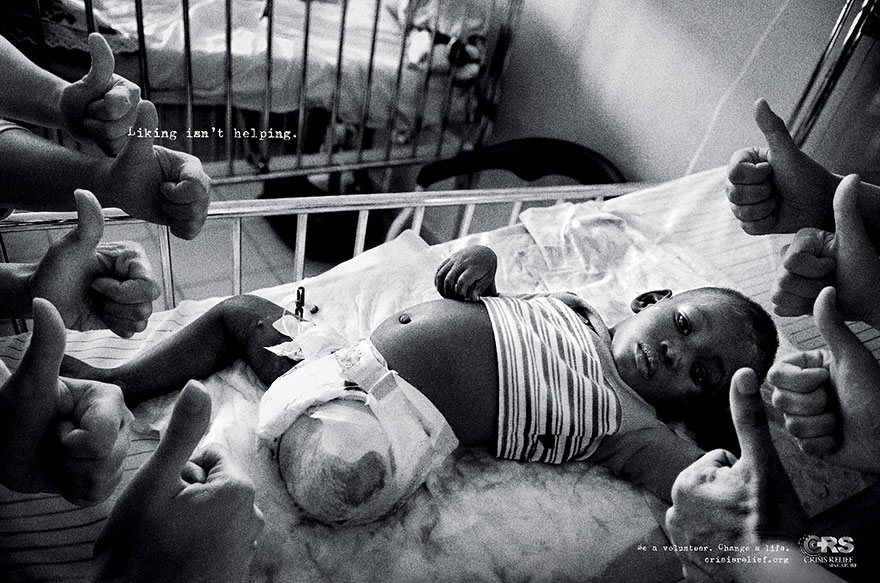
TOW #9: Visual
Sunday, November 1, 2015
TOW #8: IRB
In the second half of The Perfect Storm by Sebastian Junger, the critically acclaimed author and writer in magazines such as The New York Times and American Heritage, further attempts to entertain his audience through the thrilling adventure of the crew of the Andrea Gail on their fishing trip out to sea.Through the usage of sentence structure, Junger achieves in increasing this thrill in order to further entertain his reader. Junger often tends to make his sentences very direct, meaning that he intends to quickly get to the point through shorter sentences as opposed to writing longer sentences which do not have the same direct effect. For example, in the chapter titled The World of the Living, Junger explains how “ The Guardsmen zip up their flight suits and file out the door. A rescue helicopter has just ditched fifty miles offshore and now five National Guardsmen are in the water, swimming” (Junger 165). This sentence structure not only compliments Jungers purpose to create an entertaining and thrilling piece of literature, but it also allows for Junger to further attract an audience based around adventure-seeking enthusiasts with its striking and concise organization. Through the end of this book, the reader is compelled with the intriguing style of Junger as well as the situations that the crew faces. While the crew itself does not have a happy ending in a sense, Junger does as a result of the large success of his book. In fact, The Perfect Storm was later transformed into a major motion picture. This is because Junger was able to vividly bring a tragic story to life and present it to various audiences of both those interested in the history of the crew as well as those who are fans of thrillers and or adventure. I believe that through the style and sentence structure that Junger uses, he does a tremendous job at constructing a stellar novel that is still today praised by many.
Subscribe to:
Comments (Atom)