Sunday, December 13, 2015
TOW #12: IRB post
In the the first half of the book The Last Outlaws: The Lives and Legends of Butch Cassidy and The Sundance Kid, Thom Hatch, a consultant and commentator for The History Channel as well as PBS, presents the astounding backstory of two of the most notorious criminals out west during the frontier. While Hatch has succeeded in the past with writing books based on the history of the wild west, The Last Outlaws goes to a place in which none other of Hatch's books have gone before: telling the stories of the two most dangerous bandits within the time period. Being that this book is so essential to Hatch's collection of western literature, Hatch uses rhetoric in able to make his book more of just accounts from the past, but rather a living and breathing thriller itself. Through the usage of imagery, Hatch is able to emphasize these extraordinary events that took place within the lives of Butch Cassidy and The Sundance Kid. In a description of one of the pair first criminal acts, “Butch grabbed the satchel and two bags of loot and made a mad dash for Elzy and the horses” (Hatch 152). This descriptive imagery successfully recreates the event taking place and establishes an intriguing experience for an audience consisting of history jocks and western enthusiasts alike. The diction that appears along with this imagery helps the audience to picture exactly how the bandits may have acted years ago when the events took place. Because the usage of diction and imagery worked successfully well together in this series of extraordinary events, I believe that Hatch succeeds in capturing the history of Butch Cassidy and the Sundance Kid in the first half of his book. If it were not for this usage of rhetoric, The Last Outlaws would simply be an accountable description of the past.

Sunday, November 29, 2015
TOW #11: Nonfiction piece
In the inaugural address by John F. Kennedy, the 35th president of the United States, Kennedy uses first person plural pronouns as well as juxtaposition in order to ensure trust into the the American people. I believe that through the use of these rhetorical devices Kennedy manages to not only ensure trust in his audience, but he does so by proving his responsibility as a leader and an American citizen. Through the usage of first person plural pronouns Kennedy establishes that he is not in particularly someone of a higher power, but someone of equal power as his audience: an American citizen. In some cases Kennedy even establishes that the American citizens have just as much power as he does, creating a sense of responsibility in both the audience and president Kennedy. This is present in Kennedy's speech in paragraph four when he states that “We dare not forget today that we are the heirs of that first revolution” (para. 4). By stating this Kennedy is sharing his newly acquired power with the American people by telling his audience that both him and the American people are what will determine the future of the United States; that they carry the legacy given to them by the founders of America, not just Kennedy. Kennedy also uses juxtaposition in order to increase nationality in his country. Juxtaposition can be found in this inaugural address when Kennedy states that we, as the American people, should “Let every nation know, whether it wishes us well or ill, that we shall pay any price, bear any burden, meet any hardship, support any friend, oppose any foe, to assure the survival and the success of liberty” (para. 5). This is an example of juxtaposition because it presents to the audience that other countries cannot accomplish the tasks that the United States is capable of achieving. Through this usage of first person plural pronouns and juxtaposition, Kennedy manages to create a memorable and uplifting speech for the citizens of the United States.
Sunday, November 22, 2015
Tow #10: Nonfition
In the editorial titled “The Price of Fear” by the editorial board at The New York Times, a successful newspaper company praised across the United States and the rest of the world, The terrorist attack on Paris is discussed along with its effect on the United States. Within this essay, the author touches on people's fear of terrorism and how people, in particularly those of the United States, tends to react to this fear. The editorial board manages to successfully approach this issue through its use of juxtaposition. Within the essay, issues such as The Iraq war, as well as Japanese internment are brought up in order to juxtapose with the terrorist attack in Paris and its possible effects. The author notices that these threats in the past have all lead to questionable decisions as a result of one common concern: that there is a lack of safety within the United States. By juxtaposing these events with that of the attack on Paris, the author is trying to emphasize to the audience the main purpose that “it is natural to want to restore a shattered sense of safety. But the best way to do that has always been to draw upon our greatest ideals” (Para. 9). Being that her main purpose is stated at the end of her essay after she states all of these events as opposed to before, I believe that the author is able to further verify her point to the audience. By saving the “so what?” for the very end of the essay, the author is able to further emphasize her use of juxtaposition being that it is what further draws the audience towards the greater meaning of the editorial. Overall, I believe that the editorial board at The New York Times successfully manages to prove to the United States citizens and political leaders through the use of juxtaposition as well as through style and structure that the best way to deal the terrorist attacks on Paris s not to overreact on a possible lack of safety, make logistical decisions off of past successes and failures.
Sunday, November 15, 2015
IRB #2 Intro
For my 2nd IRB this year, I chose the book Born to Run: A Hidden Tribe, Superathletes, and the Greatest Race the World Has Never Seen. I chose this book because being that I am a runner myself, I was interested in reading a book on running. I have heard good things about this book from other individuals and it has very good reviews online, so in conclusion to those reviews and references, I decided that I wanted to give this book a shot this marking period. This is why I chose this book as my IRB this marking period.
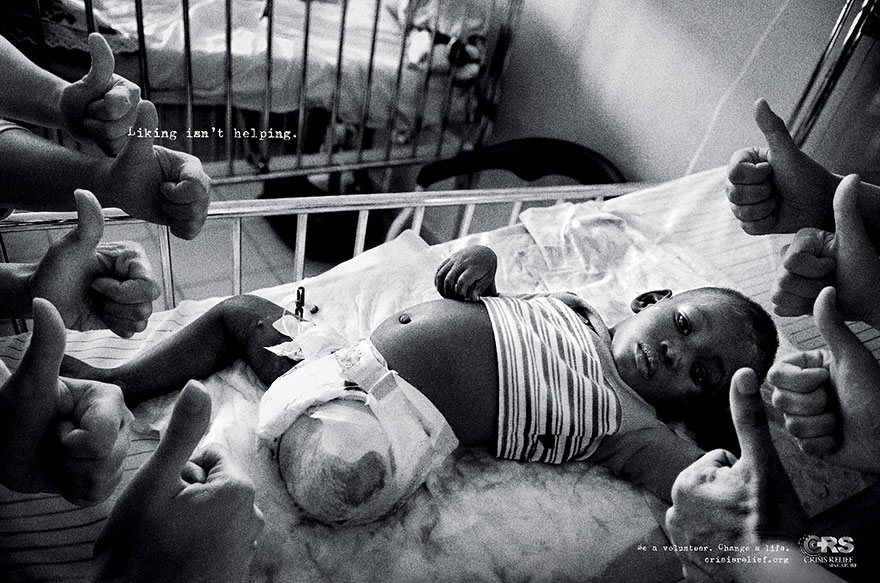
TOW #9: Visual
Sunday, November 1, 2015
TOW #8: IRB
In the second half of The Perfect Storm by Sebastian Junger, the critically acclaimed author and writer in magazines such as The New York Times and American Heritage, further attempts to entertain his audience through the thrilling adventure of the crew of the Andrea Gail on their fishing trip out to sea.Through the usage of sentence structure, Junger achieves in increasing this thrill in order to further entertain his reader. Junger often tends to make his sentences very direct, meaning that he intends to quickly get to the point through shorter sentences as opposed to writing longer sentences which do not have the same direct effect. For example, in the chapter titled The World of the Living, Junger explains how “ The Guardsmen zip up their flight suits and file out the door. A rescue helicopter has just ditched fifty miles offshore and now five National Guardsmen are in the water, swimming” (Junger 165). This sentence structure not only compliments Jungers purpose to create an entertaining and thrilling piece of literature, but it also allows for Junger to further attract an audience based around adventure-seeking enthusiasts with its striking and concise organization. Through the end of this book, the reader is compelled with the intriguing style of Junger as well as the situations that the crew faces. While the crew itself does not have a happy ending in a sense, Junger does as a result of the large success of his book. In fact, The Perfect Storm was later transformed into a major motion picture. This is because Junger was able to vividly bring a tragic story to life and present it to various audiences of both those interested in the history of the crew as well as those who are fans of thrillers and or adventure. I believe that through the style and sentence structure that Junger uses, he does a tremendous job at constructing a stellar novel that is still today praised by many.
Sunday, October 25, 2015
TOW#7: Nonfiction Piece
In the “Pearl Harbor Address to the Nation”, Frederick D. Roosevelt informs the United States on the dreaded Japanese attack on Pearl Harbor that occurred on December 7th, 1941. Within this speech, Roosevelt, the President of the United States at the time, uses remorseful diction as well as repetition in order for Roosevelt to further relate with his audience. Being that Roosevelt is the president of the United States during this time period, many people look up to Roosevelt as a man of higher authority and power than any other citizen. Within his use of rhetorical devices however, Roosevelt manages to relate to his audience by making the Japanese out to be a common enemy to both him and the rest of the United States. Within his usage of remorseful diction, such as “A date which will live in infamy”(para. 1), Roosevelt brings pathos to his speech, allowing for his audience to emotionally relate to Roosevelt both through anger and sorrow. Being that this major event brought the United States into World War Two, this anger allows for an effective usage of propaganda in order to convince American citizens to enlist into the war. While the purpose of the speech was not in particularly for the United States to gain more troops in its forces, the purpose was in fact for the United States as a whole to feel the need to unite against the Japanese. Through this usage of remorseful diction, I believe that Roosevelt does a great job at convincing the American population to do just that. If Roosevelt were not able to establish this pathos into his speech, the United States reaction to joining the war may have been a very negative one, but because Roosevelt was able to bring himself down to the level as the rest of the American population and establish a common enemy, the reaction was nowhere near as catastrophic as it could have been made out to be. Because of this, I believe this speech was very effective.
Sunday, October 18, 2015
TOW #6: Nonfiction Piece
In the editorial titled “The Grown-Ups Take the Stage at the Democratic Debate”, the editorial board for the New York Times discusses the oppositions brought up during the Democratic debate. While this editorial mostly focuses on the Democratic candidates Bernie Sanders and Hillary Clinton, The author of this editorial often likes to compare the 5 democratic candidates depending on their policies. Not only does the author tend to compare the candidates, but the author does it in a demeaning sense. When discussing Bernie Sanders uncertain views on gun control for example, the author presents Sanders as “undermining his image as the righteuos truth teller” (nytimes.com 6). By using this diction to cripple Sanders reputation amongst the Democratic party, The Editorial Board manages to further convince an audience compiled of Democratic supporters on who they should stand with during the debates. Not only does The Editorial Board aim their editorial towards Democratic supporters, but they also attempt to pull in a republican party as well, trying to convince them to convert to Democratic candidates rather than those of the Republican party. This can be seen during the intro of the editorial when the Republican party is referred to as a “circus of haters, ranters and that very special group of king killers in Congress” (nytimes.com 1). While this essay does a fine job at comparing the democratic candidates in order to give democratic supporters greater insight on the debate, the editorial is weak in a sense that it is very biased towards the Democratic party. The editorial does in a sense do a decent job at persuading republican supporters to switch over to the Democratic party, the author does very little to belittle the Democratic party themselves, simply taking away the author's credibility as a reliable source in terms of input on the democratic debate. Due to this very biased standpoint, I do not believe that this is the strongest editorial for the democratic debate.
Sunday, October 11, 2015
TOW #5: Visual
Through the usage of pop culture, the creator (who is left unnamed) of this image is able to sustain a large audience to the anti-smoking movement, creating an effective piece of propaganda. While the image itself is simplistic, it manages to draw in a large audience due to its reference to the popular video game brick breaker, a game that is easily recognizable to all. Within the picture itself, the bricks, which are broken during the game, represent a set of lungs. This communicates to the audience that through the usage of tobacco, oneself is only slowly beating away their own health, in particularly their lungs. Cleverly enough, the author also chooses to represent the paddle, which is used to hit the ball which breaks the bricks, is represented as a cigarette. This shows the audience that cigarettes themselves are what are destroying our lungs. As a result of this images simplistic and clear point, it is not only easy for the audience to comprehend the message, but it also has a greater impact on the audience because of its usage of the reference to brick breaker. I believe that this piece of propaganda for the anti smoking community is very effective in a sense that it sends a deeper message to the audience of not only how smoking can affect your health, but also of why not to smoke. Through the usage of brick breaker, the creator of the image is subliminally telling his audience that smoking is all fun and games until your health has depleted. This relates to brick breaker because the game in itself is fun until all of the bricks are gone and the game is finally over. Through this deeper interpretation, I believe that this ad not only completed its task in bringing the attention of the anti smoking movement to a greater audience, but also solidified itself as one of the most recognizable pieces of anti-smoking propaganda.
Sunday, October 4, 2015
TOW #4: IRB Post
Through the first half of the book The Perfect Storm by Sebastian Junger, who is also a writer of many magazines such as American Heritage, The New York Times, Outside, and Men’s Journal, Junger tells the story of a six-man swordfishing crew who goes out to sea in search of business. A fisherman’s tale one might say; however, this tale in itself is one meant to entertain those who seek a thrilling non-fiction story, not simply those who enjoy the world of fishing. While it is a valid argument as to why Junger writes this book in order to entertain those who have a divine interest in fishing, it is clear through Junger’s usage of rhetorical devices that Junger is trying to make an attempt at touching on the interests of many rather than the interests of one group in particular. One usage of imagery that stood out in particularly is “Dawn at sea, a grey void emerging out of a vaster black one. ‘The earth was without form and darkness was upon the face of the deep.’ Whoever wrote that knew the sea- knew the pale emergence of the world every morning, a world that contained absolutely nothing, not one thing” (Junger 54). Within Junger’s usage of both vivid imagery and rhetorical imagery, I believe that Junger manages to create a stronger appeal in his book to people interested in the genre of action and adventure. Through this, Junger proves that his purpose in writing this book is not to inform people on an ironically-called perfect storm or to tell a story that is meant to entertain other fisherman on a swordfishing trip out to sea: it is meant to tell the adventurous and thrilling story of the crew of the Andrea Gail. While the climax of the story is not truly reached in the first half of The Perfect Storm, it most definitely manages to hook on an audience that may not have been present if it were not for Sebastian Junger’s powerful usage of rhetorical devices.
Sunday, September 27, 2015
TOW #3: Non Fiction Post
In the memoir titled Lessons From a Hustler, Peter Mountford tells the story of his unstable yet exciting life while working at a pool hall in Washington D.C. Mountford, an American novelist and writer of numerous short stories, goes through these chapters of his life using various types of rhetorical devices in order to add imagery into the reader's head. Through these uses of rhetorical devices, I believe that Mountford manages actively entertain his audience. While at times the entertainment concept of Mountford’s writing takes away from his purpose, Mountfords vivid imagery in the story allows for him to give his audience exactly what they want: entertainment. These rhetorical devices include, imagery, similes, as well as colloquialism. These descriptive devices further allow the reader to embrace themselves into the memoir; causing them to not only relate to the events, but live them. While Mountford looks to entertain his audience through his text, he also wishes to get across to his audience the point that the past is something that relies on perspective; that there is never a right answer as to how something may have occurred. As stated at the very end of Mountford’s memoir, “We had a blast. Then again, maybe I was the only one having fun” (Mountford 65). Being that many of his colleagues faced struggles as racism, poverty, and hospitalization at his time working there, he cannot say that the experience was joyful for everyone else, in fact it remains a mystery to Mountford; he will never know exactly how his friends and co-workers felt about Babes, the raggedy old pool hall in Washington D.C. Not only could this essay be seen as a source of entertainment for an audience looking for a story on hustlers in Washington D.C., but it can be seen as a cry for help from the author: a cry stating that he is afraid that the most wonderful moments of his life could have potentially have been the worst for those closest to him.
Sunday, September 20, 2015
TOW #2: Piece of Non-Fiction
In the editorial Crazy Talk at the Republican Debate, The Editorial Board at The New York Times writes and further elaborates on the points brought up at the Republican debate, along with the negative connotations with them. The Editorial Board attempts to establish ethos into their editorial by directly quoting the Republican candidates; giving credibility to the author in order to further prove their point that the Republican candidates are in way over there heads. One example of this in particular would be how the author refers to the parties views on illegal immigration. The author even goes as far as to correlate these views on immigration to “a 21st-century Trail of Tears” (www.nytimes.com 5). Through this comparison, the author makes the Republican party to appear as not only the party that is wrong for this country, but as a violent and unforgivable force to people of all races other than Caucasian. While this editorial may appear to be one aimed towards Democratic supporters, it is actually aimed directly towards the supporters of the Republican party. This is because this editorial is meant to persuade more American citizens to support the Democratic candidates over the candidates of the Republican party. While The Editorial Board manages to bring up some excellent points as to why to support the Democratic party rather than the rather violent Republicans, I believe that the editorial was poorly put together. Yes, the evidence was there to support their point, however, there was no counter argument as to why someone should support the Democratic side of the election over the Republicans. Because of this, the essay can easily be seen as an informative editorial rather than a persuasive one. This is where the author lacked as far as the content of their editorial went. I do believe that the editorial had the potential to be very strong, however, this was a mistake by the author that cannot be made up for.
http://www.nytimes.com/2015/09/18/opinion/crazy-talk-at-the-republican-debate.html
Wednesday, September 16, 2015
TOW #1: Visual Text
In this political cartoon, Banksy, a graffiti artist/vigilante from London, England who has gained a cult following in the world of political satire, attempts to get his point across to his audience that the government is holding people back from achieving their own dreams. By spreading his views through the work of vandalism, Banksy spreads the message to his audience that he is opposed to the social order set by the government; wishing to not only to be seen by the public as a role model, but also as a foe to all social injustice. Through this piece of work in particular, Banksy is speaking to the people of England who have had dreams in the past and ended up never following them. While this could be for many different reasons, anyone who has left their dreams behind can relate to what is being said. Bing that the “cancelled” sticker is emphasized in this piece, it can be said that Banksy is trying to get across that dreams are something of the past; they are not postponed, they are forgotten. Much of the public has forgotten their true desires due to the urge for civilization to grow up in a society where currency and social order are the biggest concerns; not our own desires People do things not because they wish to, but because they need to; that is what Banksy attempts to get across to his audience through this text. Being that Banksy creates most of his artwork through graffiti, I believe that Banksy takes a creative standpoint on how to get his message across to more people (by putting it on buildings for the public to see) and that by doing so he is more likely to gain a following on his views on social injustice. Banksy is a talented and powerful artist and has achieved his goal in effectively spreading his views to his audience in appropriate manner for the purpose.

IRB Intro #1
For my IRB I chose the book The Perfect Storm by Sebastian Junger. This book was recommended to me by my father so I decided to give it a chance. Although I do not know much about the topic itself, I believe that it will be an interesting book to read and that it will allow me to become more comfortable with reading non fiction books on topics I am not familiar with.
Sunday, August 30, 2015
The Lives of a Cell
By: Lewis Thomas
Mankind is no greater than any other organism to inhabit this planet called Earth. Every species is created equally; every species plays a part in this “long and tedious biological game” (Thomas 360). The belief that the human race is a delicacy to this planet is only a result of the ignorance that mankind beholds. At the end of the day, Earth is simply “a single cell” (Thomas 360); mankind is solely helping it function. That is the point Lewis Thomas tries to get across to his audience in his essay The Lives of a Cell. For those not familiar with Lewis Thomas, Thomas is a Harvard medical school graduate from Flushing, New York. Through his years after college, Thomas took many teaching jobs as well as research posts before winning the National Book Award for his highly anticipated Lives of a Cell. Within this essay, Thomas brings it upon himself to explain to his audience, or mankind itself, that every living thing is made up of cells. There is nothing special about the human race; “We are not made up, as we had always supposed, of successively enriched packets of our own parts. We are shared, rented, occupied [by cells]” (Thomas 358). While Thomas stresses the idea that all living beings are composed of cells, he also contradicts himself by mentioning how evolution determines who stays and who does not stay in this game of life. With viruses racing from organism to organism however, Thomas points out how this can further lead to the mutations of species. While many species will die out eventually, they will continue live on through their heredity which may in fact end up being an entirely new species. Although it is clear to Thomas that not all species are the same, it is clear to him that all species work towards a common goal: to maintain life on Earth. With Thomas’s uses of both vivid imagery and similes throughout his essay to back up his views, Thomas manages to undoubtedly achieve his goal in getting his point across to his audience.
 |
| thobewill.deviantart.com Home No matter how different we are from one another, we are all apart of one home at the end of the day |
The Doomed in Their Sinking
By: William H. Gass
Suicide: there are many different reasons for it; many different ways to achieve it. Many try to make excuses for the act, however, in the end “Death will not fill up an empty life and in a line of verse it occupies only five letters of space” (Gass 380). Death merely marks the end; that is all it can stand for. No matter the reason for why someone commits suicide, it in no way can bring meaning to one's life. William H. Gass, a National Books Critics Circle award winner and philosophy major, attempts to bring this point across to his audience in his essay The Doomed in Their Sinking. Through his usage of both imagery and analogies between different views on suicide, Gass works to present to the reader what may go through someone's head when contemplating suicide. Being that Gass lost his mother to suicide, it is evident throughout Gass’s writing that he himself is also somewhat confused as to why someone may want to commit such an act. It is almost as though Gass is trying to figure out what went through his mother's head when she ended her life. Due to this, it can also be inferred that Gass is trying to relate to an audience that includes individuals who may have also lost someone close to them to suicide. Gass soon ends off his essay with by stating that “The world of the suicidal is, in a certain sense (for all its familiar elements: pain, grief, confusion, failure, loss…), a private and impenetrable one” (Gass 381). Suicide is a decision chosen by the doer; although many may feel responsible, there was only one person who made the decision in the conclusion of it all. While Gass’s essay is well written, due to Gass’s urge to change subjects, it is often difficult to follow what Gass is trying to communicate to his audience. Being that this is the case, I believe that Gass executed his goal well enough to get his point across, however, the constant change in subject took away the essays full potential. |
| dubsmashit.com Beauty in the Darkness Even when everything else seems to turn dull, there is always something truly beautiful deep down that is worth waiting for. |
Bop
By: Langston Hughes
In an essay dedicated to both black culture as well as the struggles the African American population faces, Langston Hughes goes on to explain the everyday struggles of the average black man through the meaning of bop. According to Hughes, a highly acclaimed African American writer and Lincoln University graduate, bop is a form of African American music brought upon the media through the cops brutal tactics on the black community. Through Hughes essay Bop, a man by the name of Simple goes on to explain to the main character, who is left unnamed, the history of bop music and how its popularity grew among the community. With the addition of both colloquialism as well as the usage of onomatopoeia, Hughes manages to further bring his essay to life in a way that it is interesting to all readers of both African and Caucasian descent. While the essay was most likely aimed towards the black population, as times have changed since the publication of this essay, this essay’s audience and purpose has also seemed to change. In a society where equality is stressed more than ever, this essay's audience has expanded to those who wish to learn more about the black vernacular as well as possibly the African American influence on pop culture today. While the use of colloquialism may spark confusion at time for certain readers, I believe that without it, the essay would be that much less appealing to the average reader. Through Hughes usage of rhetorics, Hughes manages to not only inform us about the daily struggle of the African American population, but also put us in the place of the average black man himself. While Simple in the essay Bop stresses that “Folks who ain’t suffered much cannot play Bop, neither appreciate it” (Hughes 191), Hughes manages to make his reader respect the black race for the challenges they faced everyday.
 notyourjukebox.com Brighter Songs; Brighter Days |
| Every song is a new episode; every side is a new chapter. While some songs may be more depressing than others, the times will always change for the better. |
Subscribe to:
Comments (Atom)